Front Royal to Broadway, Virginia
Manassas Gap
Railroad
A rail-with-trail proposal for the Shenandoah Valley that preserves the corridor for potential short-line freight, scenic excursions, and a public walking and biking trail.

Rails with Trails
See how a public trail, scenic train rides, and short-line freight could share the historic corridor from Front Royal to Broadway.
The Corridor
A transportation corridor through the Valley
The existing right-of-way runs through Warren, Shenandoah, and Rockingham counties. Retaining the rail alignment preserves the option to connect Valley producers and industrial sites to the broader freight network. A separately designed trail could connect residents and visitors to towns, local businesses, and historic sites.
Freight & Industrial Development
Another shipping option for Valley businesses
A restored short line could give local shippers access to rail for part of a trip. The commercial case would depend on shipper demand, actual freight volumes, interchange arrangements, and the cost of restoring the line.
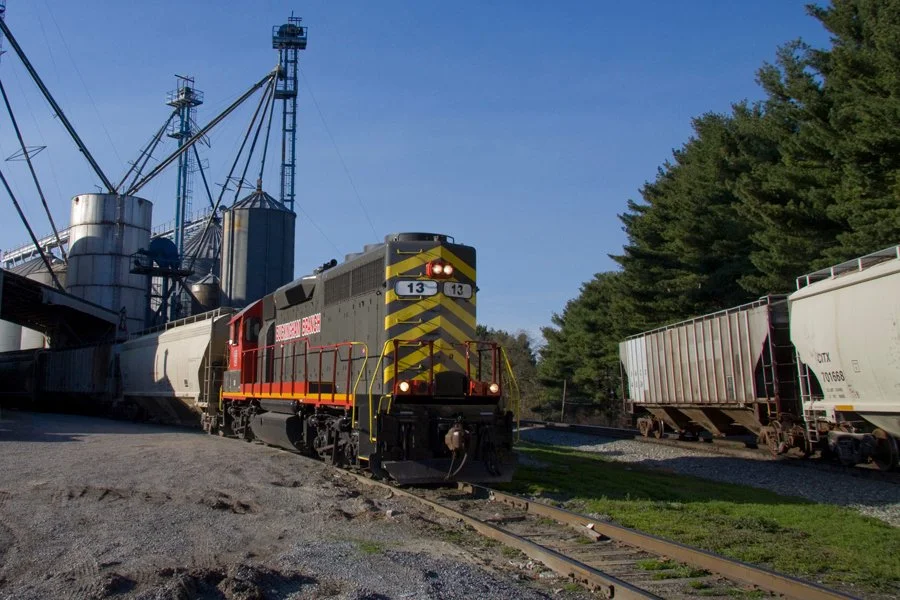

Agriculture
Farms, cooperatives, and agricultural suppliers could evaluate rail for bulk inputs and products such as fertilizer, feed, and grain.
Industrial access
Manufacturers and distributors could assess whether direct rail access or a nearby transfer facility would fit their supply chains.
Truck-to-rail transfer
A transload site could allow shippers without their own sidings to combine local trucking with longer-distance rail service.
Rail with Trail
Rail operations and recreation in one corridor
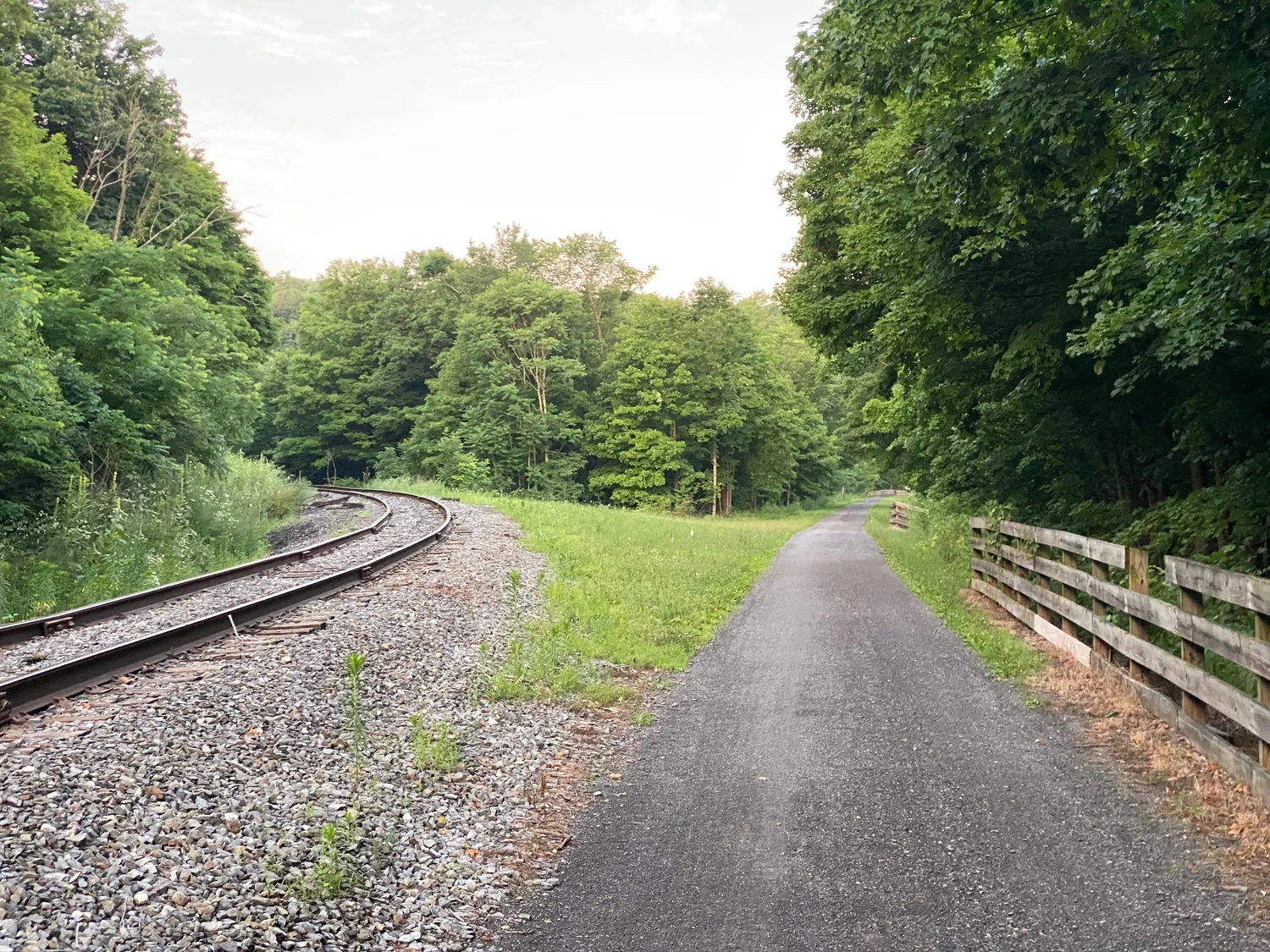
The proposal would retain the rail alignment and provide an adjacent, separately designed public trail. The final alignment, setbacks, road crossings, and bridge treatments would depend on engineering and approvals.

Scenic excursions
Future excursion operators could build itineraries around Valley scenery, historic interpretation, and stops near local shops, restaurants, and lodging.
Walking and biking
A multiuse trail could connect downtowns and historic sites and create opportunities for outfitters and other visitor-serving businesses.
Rail and trail design
Engineered separation and crossings would support a public trail while retaining space to evaluate future freight and excursion operations.
Railroad Heritage
Built to connect Valley agriculture to wider markets
Chartered in 1849, the Manassas Gap Railroad reached Strasburg in 1854. It linked the agricultural Shenandoah Valley to northern Virginia and connected with the Orange and Alexandria Railroad at Manassas Junction.
During the Civil War, that same connection became strategically important. The surviving alignment ties together farms, towns, and battlefield landscapes and gives future visitors a way to understand how the railroad shaped the Valley’s economy and geography.
Explore the historic railroad map at the Library of Congress

Project Status
Restoring rail service and adding a trail
We’re working to restore service on this historic short line and add a pedestrian trail alongside the tracks.
VDOT completed its rail-with-trail assessment in 2026 and reports that Virginia directed acquisition negotiations. The trail configuration remains undecided. Restoring rail service would require control of the corridor, rehabilitation, funding, an operator, and applicable approvals.
The federal abandonment proceeding is listed as postponed in the Surface Transportation Board’s case status. See docket AB 290 (Sub-No. 425X).
Studies and references
- Virginia Department of Transportation rail-with-trail assessment
- Virginia Department of Rail and Public Transportation short-line case study
- Virginia Scenic Railway’s Staunton excursion and downtown stop
- Virginia’s Shenandoah Valley linear park feasibility study
- Encyclopedia Virginia history of the Manassas Gap Railroad